We have all been there. You pay to boost a Facebook post, you wait for the inquiries to roll in, and then the reach quietly drops halfway through the day. Someone tweaks an algorithm, and suddenly your business is almost invisible to the followers you spent years collecting.
Here is the uncomfortable truth about selling online in Sri Lanka right now. You do not own your social media audience. You are renting space on a platform that can change the rules whenever it likes.
The fix is to move your customers onto something you actually control, and that is where email marketing comes in. Followers can disappear overnight. An email list is yours to keep.
If you are just getting started, one tool stands out for being genuinely easy to use: Mailchimp. Whether you are comfortable with tech or you get a headache just looking at code, this guide walks through how Mailchimp works and why it might be the piece your marketing has been missing.
So what is Mailchimp, really?
Forget the jargon for a second.
Think of Mailchimp as an organised, reliable digital assistant for your business. If you tried to send 500 promotional emails straight from your normal Gmail account, Google would almost certainly flag you for spam and lock things down. Mailchimp is built for exactly this. It lets you send professional emails to thousands of people at once, safely and within the rules.
It also does far more than blast out messages. It remembers who your customers are, keeps track of what they buy, and reaches out to them at the moment they are most likely to spend.
For a bit of context, Mailchimp is not a tiny experiment. It has been around since 2001 and is now owned by Intuit, the company behind QuickBooks and TurboTax, which bought it in 2021. So the platform you are trusting with your customer list is mature and well supported.
How Mailchimp actually works
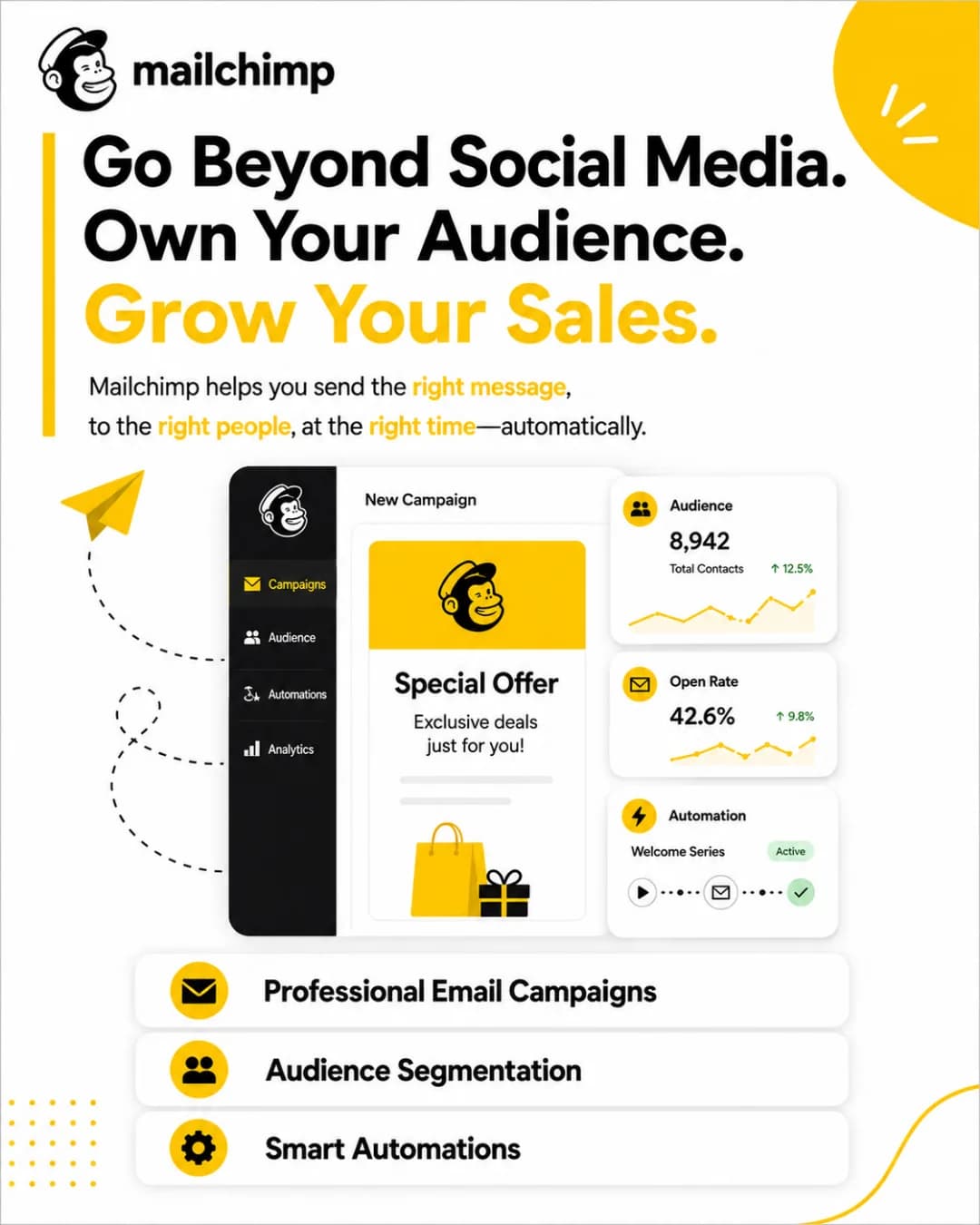
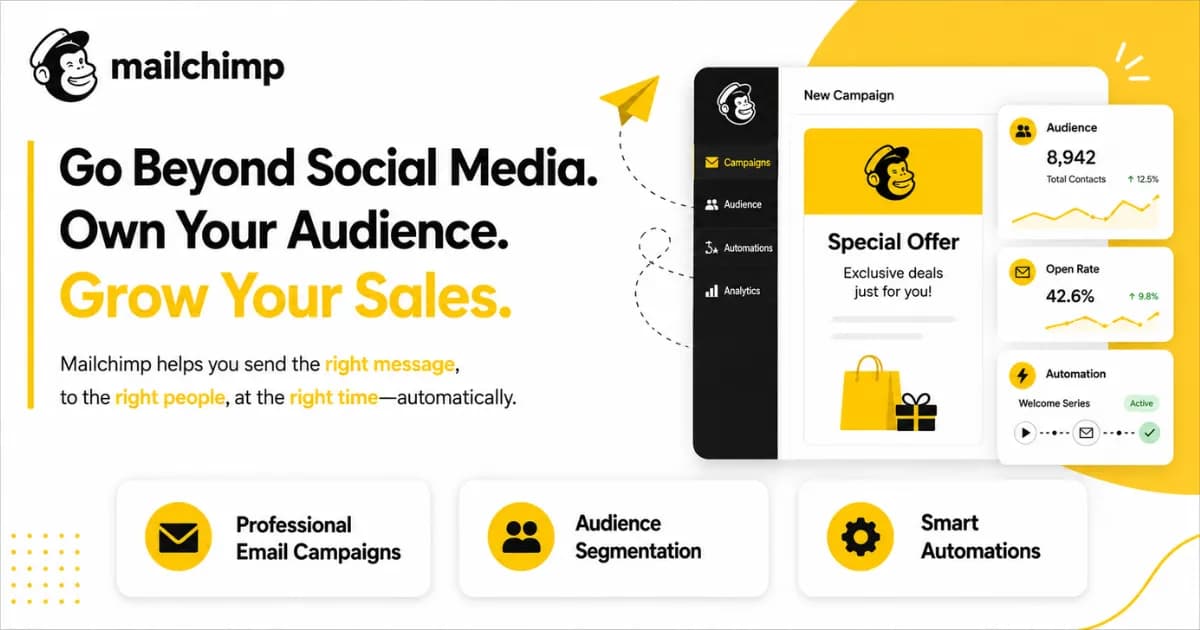
Beautiful email campaigns with zero coding
Say you have a big Avurudu sale coming up and you want to send a striking promotional email to your whole customer list.
You do not need to hire a developer or chase a designer. Mailchimp comes with a drag and drop builder. You drag a product photo onto the canvas, drop a text box underneath, type your offer, and recolour the button to match your logo. Ten minutes later you have an email that looks like an agency put it together.
One detail that matters in Sri Lanka: most people read email on their phones. Mailchimp templates are mobile responsive by default, so your campaign looks right whether it lands on a laptop or a budget Android.
Audience segmentation, so the right message reaches the right person
Imagine you run an online clothing store. If a customer just bought men's formal shoes, sending him a discount on women's floral dresses the next day is a waste of everyone's time.
Mailchimp solves this with tags and segments. You group people by what they actually do, for example a "Men's Footwear Buyers" list and a separate "VIP Customers" list. Then you only send offers that are relevant. When customers receive emails they care about, they open more of them and they buy more often.
Reports that show you what really happened
After you send a normal email, all you can do is hope someone reads it.
Mailchimp takes the blindfold off. Its reports show, close to real time, how many people opened the email, who clicked through to your website, and which links they tapped. If a red "Buy Now" button gets twice the clicks of a blue one, you have your answer for next time. Testing two versions like this even has a name inside Mailchimp. It is called A/B testing, and it is built in.
The set it and forget it magic: automations
This is where Mailchimp starts working while you sleep. Mailchimp calls these flows Customer Journeys.
Here is a common one. A customer visits your store, adds a 5,000 LKR item to the cart, then gets a phone call and leaves without paying. Normally that sale is gone.
If your store is connected to Mailchimp, an automation steps in. A couple of hours later, Mailchimp quietly emails that exact person: "You left something behind. Complete your order now and get 5 percent off." You did nothing. The system spotted the abandoned cart, waited the right amount of time, and recovered the sale.
Abandoned carts are only one example. A welcome series can greet every new subscriber, a re-engagement flow can win back people who have gone quiet, and a birthday email can send a small offer on the day. You build the logic once and it runs on its own after that.
A few honest things to know before you start
No tool is perfect, so here is the straight version.
The free plan is genuinely useful, but it has limits. At the time of writing, Mailchimp's free plan covers up to 500 contacts and around 1,000 email sends per month, and a small Mailchimp logo sits in the footer of your emails. That is plenty to start, test, and prove the idea works. As your list grows you move to a paid plan, and by then the sales from your emails should comfortably cover the cost.
There is also a legal side, and it matters more than people think. Email marketing only works when people actually agreed to hear from you. Buying a list is a fast way to wreck your sender reputation and land in spam. In Sri Lanka, personal data is now covered by the Personal Data Protection Act, No. 9 of 2022, so collect emails with clear consent, tell people what they are signing up for, and always include an easy unsubscribe link. Mailchimp adds that unsubscribe link automatically, which keeps you on the right side of both the law and the inbox.
Why this fits a Sri Lankan business right now
It connects to almost everything. Whether your site runs on WordPress, WooCommerce, or Shopify, Mailchimp links up and pulls in your customer and purchase data quietly in the background. It also works with tools like Canva for graphics and with your social ad accounts.
And the cost of starting is basically zero. You can begin collecting email addresses and sending campaigns without spending a rupee upfront, which is exactly the low risk start most small businesses need.
The bigger point is ownership. Social media is rented ground. An email list is an asset you control, it goes straight to the inbox, and no algorithm sits between you and your customer.